Pilgrims and Strangers, is set in the 1190s purely because characters in the novel go on crusade in 1190 (aka the Third Crusade). But why this crusade and not others? My research shows this to be the most credible crusade to send my English characters on. In part two of a series of blogs, I'll explore why the political climate had to be right for the English to consider going on crusade up to the 1220s.
Because they usually intended returning, any baron or king who wished to take a crusading vow had to consider secular politics. They needed to ensure their position within society was secure and that the status quo of power was to be maintained during their absence. Periods of danger and uncertainty were not opportune times to leave estates which were the essence of a baron's power and income. This was equally important for a king, a great magnate, or a lesser baron who held lands of another. A journey to the Holy Land lasted at least one year if not longer, it was a leave of absence not abandonment.
The First Crusade (1096-99)
In 1095 there was no precedent for taking the cross and making an armed pilgrimage to the Holy Land and thus no tradition established amongst the baronage. The English Church, in particular Archbishop Anselm, did not support the concept of such a venture and did little to promote the crusade or arouse enthusiasm. Moreover, Pope Urban II appears to have deliberately avoided Anglo-Norman lands and concentrated his crusade preaching to those in France and the Rhineland; the crusaders of this first expedition were predominantly French. However, it was the political situation within England and Normandy which ultimately constrained the barons from taking the cross.
When Urban II proclaimed the crusade at Clermont in 1095, England had been under Norman rule for barely thirty years and had experienced rebellion against the king twice in the previous seven years (1088 and 1095). Normandy under Robert Curthose's misgovernment had disintegrated into anarchy and so Robert chose to go on crusade. With his brother, William Rufus, left nominally in charge of Normandy, few Anglo-Norman barons or those holding only English lands were willing to absent themselves during his rule. Their Norman estates were threatened by the civil war which had lasted several years and William Rufus had proved he was implacable after his heavy punishment of the 1095 rebels. William Rufus' government was not weak like his brother's. William Rufus was known to be 'proud' and 'quick-tempered' with a 'tenacious memory' that 'did not easily forget an injury unless he had avenged it' (Orderic Vitalis). Taking the cross and accompanying Robert Curthouse, as many rebel barons did, might have been construed as an admission of guilt. The Anglo-Norman barons stayed to protect their 'new' lands in England and their interests in Normandy which William Rufus 'ground down relentlessly for almost five years' (Orderic Vitalis).
The Second Crusade (1145-48)
The call for the Second Crusade came in the midst of civil war in England. Disorder and disseisin by fellow barons was prevalent and King Stephen had proved himself incapable of quashing the rebellion. Moreover, recent events had demonstrated that his word was not to be trusted. In 1146, Earl Ranulf of Chester, newly defected to the king's side, was arrested on suspicion of treachery while in the king's peace and under the protection of an oath made by Stephen himself. In this period of changing loyalties, the only way to safeguard fiefs and honours was to do so in person.
New King? - not always the right time to go either
The accession of a new king heralded a period of political uncertainty for the barons. The news of the successful capture of Jerusalem in 1099 and the calls for another crusade to the Holy Land in 1100 coincided with the sudden death of William Rufus and his younger brother's swift succession. For six years Henry I battled to retain his crown and ultimately gain control of Normandy. He 'was implacable in his enmity to those who broke faith' (Orderic Vitalis). Taking the cross was not a viable consideration for the English barons.
Similarly, the years preceding the Fourth Crusade (1202-4) were a time of John's succession to the English crown (May 1199) and the continuation of the war with Phillip Augustus (which ended in 1200). This was a time to give fealty to a new overlord whose favour and patronage were to be courted. Being absent on crusade was not the way to ensure or promote personal power. By the time the baronage had settled into John's reign, Phillip II began his continental campaigns (July 1202) which culminated in the loss of Normandy in June 1204. In defence of his lands, John called on his English barons, many of whom were ultimately fighting in defence of their own lands in Normandy.
Henry III's twenty first birthday on 1 October 1228 marked the end of his minority and the resumption of royal authority by the king himself. This forestalled most baronial participation in Frederick II's crusade which was due to depart in August 1227 and eventually did so in June 1228. Like the accession of a new king, the end of the minority meant a change in the balance of power within England. Any absent baron risked missing opportunities to further himself. Many tenants-in-chief who participated in the Fifth Crusade (1217-21) returned before the king's fourteenth birthday in 1221. The Earls of Chester, Derby and Salisbury were instrumental in ensuring the proposed act of resumption failed, thus retaining power for themselves and denying Henry III sole rule of England for another seven years.
Therefore, it was unwise for barons to risk opportunities to promote their interests when leadership of the country changed. When William Marshal, the young king Henry III's regent, died in May 1219, Ranulf of Chester was on crusade. On his return one year later, Hubert de Burgh, whose position in government Ranulf had resented since 1214, had taken the role Ranulf had himself been proposed for in 1217. If he had not been on crusade, the Earl of Chester may have become regent. Instead he found his interests compromised and spent the remaining eight years of the minority opposed to Hubert de Burgh.
But if the King takes the Cross...
The periods when the English barons participated in the crusades were markedly different politically from each other and the unfavourable times already discussed. One important factor was that the reigning king was supportive of the crusade. Henry II successfully imposed the Saladin tithe, issued ordinances which supported many of the papal privileges, and sent Baldwin, Archbishop of Canterbury on a preaching tour of Wales to 'allure and bind good men ... to the service of the cross' (Gerald of Wales). When England became a fief of the Holy See in May 1213 and the Interdict was raised in July 1214, Innocent III was able to promote the crusade widely in England. Henry II, Richard I, and John all took the cross, thus encouraging their barons to make similar vows. Richard I's own desire to embark nullified the usual uncertainty associated with the succession of a new king.
The Third Crusade (1190-92)
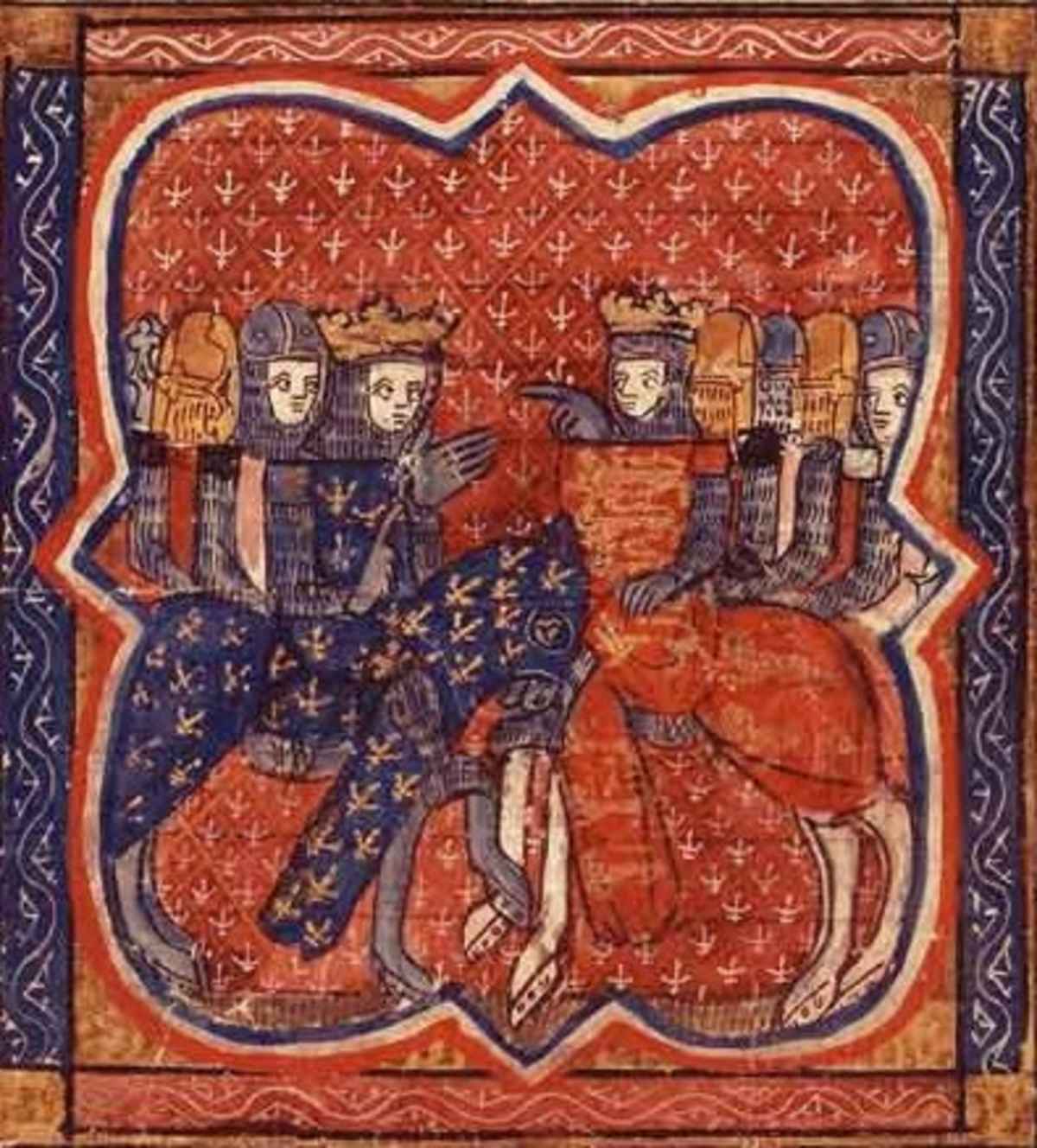
English participation in the Third Crusade was made possible not only by Henry II and Richard I's support, but also by Phillip II of France taking the cross in January 1188. This was 'a safe precaution against the one invading the kingdom of the other; for neither would go unless the other went also' (The Third Crusade: an eyewitness account). The Anglo-Norman barons would not be leaving their lands to the mercy of an ambitious enemy, because he and his own barons would be accompanying them on the same crusade. Both Richard I and Phillip II ensured they left at the same time and travelled together, thus protecting their own interests from each other.
The Fifth Crusade (1217-21)
When the English crusaders departed for the East on the Fifth Crusade, England was governed by a regency which had proved itself placatory to the barons' interests after the civil war. Many former rebel barons felt it was safe to leave for Damietta in 1219 and indicates 'that the process of settlement, in the eyes of such men, was proceeding in an acceptable fashion' (D. A. Carpenter, The Minority of Henry III). Departure was noticeably staggered and depended on the stability of individual barons' interests. The government of England during the minority was effectively in limbo for a prescribed period until the young king came of age. Thus, once the barons had safeguarded their lands and positions, the threat to them during their absence was seemingly small.
The vast majority of English barons who crusaded to the East only did so when the political situation favoured their departure - the safety of their property and the power they held were their paramount concern.